

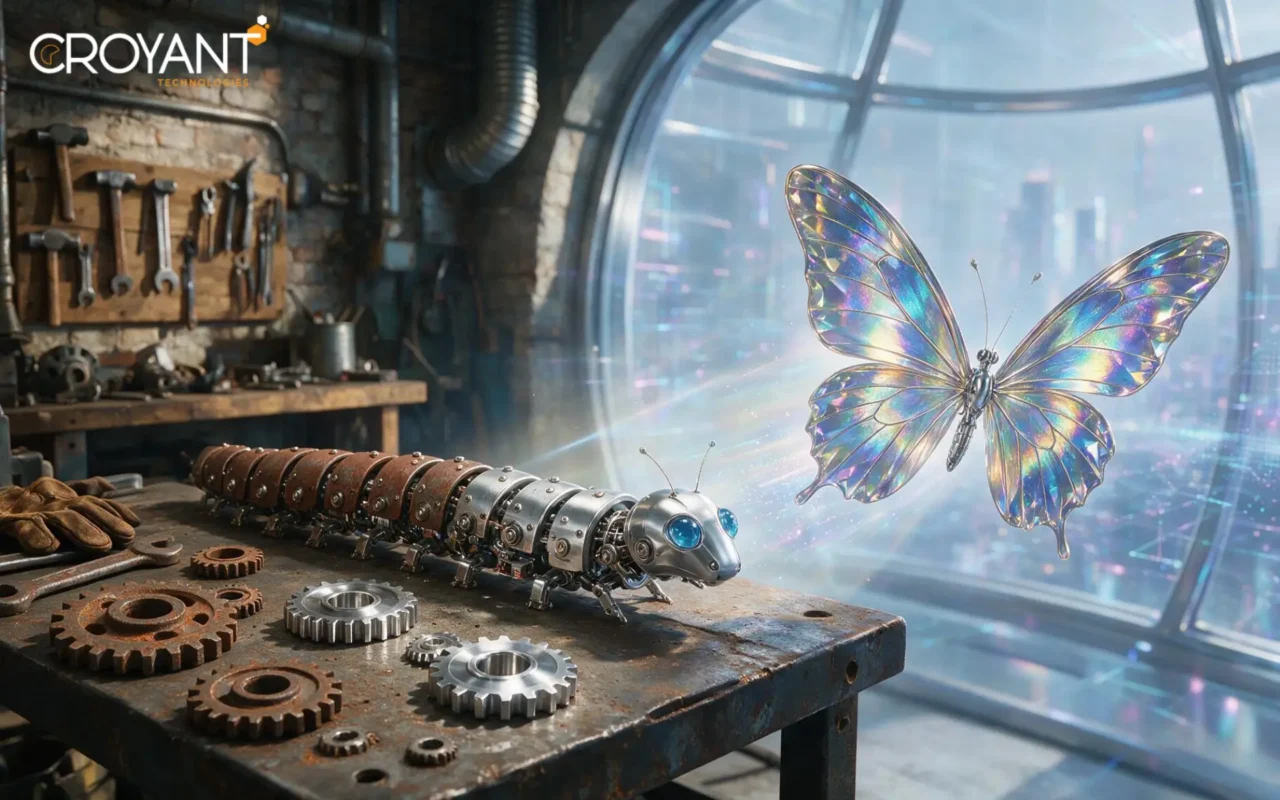
Businesses today are under constant pressure to innovate, improve customer experiences, and operate more efficiently. In response, two terms dominate boardroom discussions: IT modernization and digital transformation. While they are often used interchangeably, they represent two distinct initiatives with different objectives.
The confusion is understandable. Both involve technology investments, cloud adoption, automation, and process improvements. However, treating them as the same can lead to misplaced priorities, delayed outcomes, and poor return on investment.
The critical question isn’t whether your business should pursue IT modernization or digital transformation. It’s understanding which comes first and how one enables the other.
For SMBs looking to scale, modernize operations, or adopt AI-driven technologies, knowing the difference is essential.
Understanding IT Modernization
IT modernization focuses on improving the technology foundation that supports your business.
Its primary objective is to replace outdated infrastructure, modernize applications, improve system performance, strengthen security, and create a scalable IT environment.
Typical IT modernization initiatives include:
- Migrating legacy applications to cloud platforms
- Replacing aging servers and storage infrastructure
- Improving application performance
- Integrating disconnected business systems
- Automating manual IT operations
- Strengthening cybersecurity and compliance
Simply put, IT modernization answers the question:
“Can our technology support where the business is going?”
Without a modern infrastructure, every new business initiative becomes more difficult to execute.
Learn more about the top 7 signs your legacy database solutions are hurting your business growth.
What Is Digital Transformation?
Digital transformation goes far beyond technology upgrades.
It involves reimagining how the business operates, delivers value to customers, and creates competitive advantage using digital technologies.
Digital transformation initiatives often include:
- Customer experience improvements
- AI-driven decision-making
- Intelligent automation
- Data-driven business strategies
- Digital products and services
- Cross-functional process transformation
The question digital transformation answers is:
“How can technology fundamentally improve the way we run our business?”
While IT modernization focuses on technology capabilities, digital transformation focuses on business outcomes.
IT Modernization vs Digital Transformation: The Key Difference
The simplest way to understand the distinction is this:
| IT Modernization | Digital Transformation |
| Improves technology infrastructure | Transforms business operations |
| Replaces legacy systems | Reinvents business processes |
| Focuses on stability and scalability | Focuses on innovation and growth |
| Led primarily by IT teams | Led by business and technology leaders |
| Creates the foundation | Delivers the business value |
Think of IT modernization as building a stronger runway.
Digital transformation is the aircraft taking off.
Without the runway, the flight never begins.
Why Many Digital Transformation Projects Fall Short
Many organizations invest heavily in digital transformation initiatives before addressing their underlying infrastructure challenges.
The result is predictable.
Businesses attempt to implement AI, automation, advanced analytics, or customer experience platforms while still relying on fragmented legacy environments.
This creates several problems:
- Slow application performance
- Disconnected business systems
- Poor data quality
- Integration challenges
- Increased operational complexity
- Limited scalability
Technology alone cannot transform a business if the underlying infrastructure cannot support it.
Modernization must come first.
Global market spending for digital transformation technology and services will reach $3.9 trillion by 2027, even when 70% of projects fail to meet objectives.
A Real-World Example: Modernization Before Transformation
A recent engagement by Croyant Technologies illustrates this principle perfectly.
The client had ambitious growth objectives but was constrained by several infrastructure challenges:
- Legacy systems limiting scalability and flexibility
- Fragmented applications creating disconnected workflows
- Poor system performance affecting day-to-day operations
- Heavy reliance on manual processes
Instead of immediately introducing advanced digital initiatives, the first priority was strengthening the technology foundation.
Croyant Technologies developed a phased IT modernization strategy that focused on:
- Consolidating fragmented infrastructure
- Modernizing critical business systems
- Improving application integration
- Automating repetitive operational processes
- Building a scalable, cloud-ready environment
Perhaps the most impressive outcome was that the entire modernization initiative was completed with zero unplanned downtime, allowing employees to continue working without interruption while customers experienced uninterrupted service.
The results extended well beyond infrastructure improvements.
The organization achieved:
- Better operational efficiency
- Improved application performance
- Increased scalability
- Greater business resilience
- A modern technology platform capable of supporting future digital transformation initiatives
This project highlights an important lesson:
Digital transformation becomes significantly easier when IT modernization is completed first.
Which One Does Your Business Need?
The answer depends on where your organization is today.
Your business likely needs IT modernization if:
- You rely on legacy infrastructure.
- Applications are slow or frequently unavailable.
- Systems don’t integrate effectively.
- IT maintenance consumes most of your technology budget.
- Scaling operations has become increasingly difficult.
Your business is ready for digital transformation if:
- Your infrastructure is stable and scalable.
- Business data is accessible and reliable.
- Core systems are integrated.
- Cloud adoption is already in place.
- Leadership wants to improve customer experiences, automate operations, or leverage AI.
In reality, most growing SMBs need both.
The key is completing them in the right order.
Building a Roadmap for Long-Term Growth
Successful organizations rarely treat modernization and transformation as separate initiatives.
Instead, they follow a structured roadmap.
Step 1: Assess Existing Infrastructure
Evaluate legacy applications, infrastructure performance, cybersecurity posture, and system dependencies.
Step 2: Modernize Core Systems
Replace outdated technologies, improve integration, migrate to cloud-ready environments, and strengthen operational resilience.
Step 3: Optimize Business Processes
Introduce automation, streamline workflows, and eliminate operational bottlenecks.
Step 4: Accelerate Digital Transformation
Deploy AI, advanced analytics, customer experience platforms, and intelligent business applications with confidence.
This phased approach minimizes risk while maximizing long-term business value.
The Bottom Line
The conversation should never be IT modernization versus digital transformation.
The real question is how they work together.
Modernization creates the stable, secure, and scalable technology foundation your business needs. Digital transformation builds on that foundation to improve customer experiences, drive operational excellence, and unlock new growth opportunities.
Organizations that skip modernization often struggle to realize the full value of their digital transformation investments. Those that strengthen their infrastructure first are better positioned to innovate with confidence, adapt to changing market demands, and scale sustainably.
For SMBs, the smartest strategy is not choosing one over the other. It is aligning both within a clear, business-driven technology roadmap.
Why Partner with Croyant Technologies?
Navigating the journey from legacy systems to a digitally transformed enterprise requires more than technical expertise. It requires a partner who understands how technology investments translate into business outcomes.
Croyant Technologies helps SMBs modernize legacy IT infrastructure, build resilient cloud-ready environments, and create the foundation for successful digital transformation. With expertise in infrastructure modernization, system integration, cloud migration, and business continuity planning, Croyant enables organizations to modernize with confidence while minimizing operational risk and maintaining uninterrupted business operations.
Explore our modern database management solutions for SMBs.